

PE - Polyethylene
PE plastic, or polyethylene, is a widely used polymer known for its simple molecular structure and ease of recycling. Produced from ethylene monomers, it combines high strength with flexibility and reliable load-bearing performance.
Its naturally glossy surface gives it a clean, aesthetic appearance, while its heat resistance can reach up to 230 °C. PE also offers excellent insulating properties, as it does not conduct electricity, and provides strong resistance to water, moisture, and gas penetration.
With these advantages, PE has become one of the most commonly used plastics worldwide, with global consumption reaching around 60 million tons. It is extensively applied in consumer goods, industrial components, and plumbing systems.
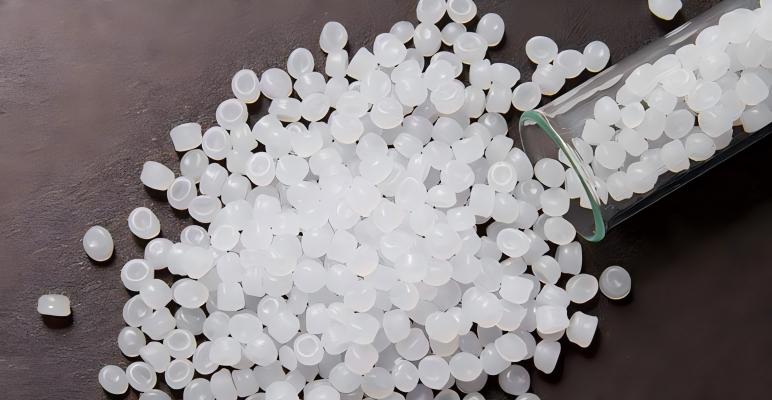
Classification by Molecular Structure & Density
(Low-Density Polyethylene)
Highly branched molecular chains, low density and crystallinity, offering excellent flexibility and transparency.
Density
Approx. 0.91–0.93 g/cm³
Molecular Structure
Branched chains, low crystallinity
Main Properties
Flexible, tough, good impact resistance, high transparency
Common Uses
Film, shopping bags, food wrap, extrusion coatings
Typical Applications:
1.Packaging films (flexible and stretch film) 2.Disposable bags and food-contact films
HDPE
(High-Density Polyethylene)
Straight-chain structure with high crystallinity, providing good rigidity and strong chemical resistance.
Density
Approx. 0.94–0.97 g/cm³
Molecular Structure
Few branches, high crystallinity
Main Properties
High strength, chemical & weather resistance
Common Uses
Containers, pipes, films, injection-molded parts
Typical Applications:
1.Bottles and chemical containers 2.Pipes, bins, and improved wear-resistant components
UHMWPE
(Ultra-High Molecular Weight Polyethylene)
Extremely long polymer chains with very high molecular weight, offering exceptional wear resistance and impact strength.
Density
Approx. 0.93–0.97 g/cm³
Molecular Structure
Millions to tens of millions
Main Properties
Very high wear resistance, low friction, high impact strength, good corrosion resistance
Common Uses
Lining plates, sliding guides, impact protection, medical implants
Typical Applications:
1.Conveyor liners and sliding components 2.Protective equipment and high-wear parts
How to Choose the Right PE Type?
1.For films or soft items requiring flexibility and transparency →
2.For structural strength, chemical resistance, and weatherability →
HDPE
3.For extreme wear, low friction, and high impact demands →
UHWMPE
More Thermoplastic Shapes
Looking for Something Else?
Explore material possibilities for your engineering project by starting with the operating temperature of your application
60°C to 120°C
Engineering Plastics
Enhance component efficiency with lighter materials that deliver reliable performance and safety. Our range of Engineering Plastics—including UHMW-PE, PET, Nylon, acetal, and more—maintains consistent mechanical strength across a broad temperature window (about 60 °C to 120 °C ). These polymers also provide good machinability, dependable electrical properties, and strong chemical resistance for versatile application needs.
120°C to 230°C
Advanced Plastics
Maintain stable mechanical properties across a wide, high-temperature range. Our Advanced Engineering Plastics lineup—featuring premium grades of PEI, PSU, and PPS—is designed for applications operating between 120 °C and 230 °C . These materials offer enhanced dimensional stability, excellent creep resistance, strong electrical performance, and outstanding chemical resistance for demanding environments.
230°C to 425°C
Extreme Plastics
Our highest-performance machinable plastics—PEEK, PTFE, PI, and PAI —are engineered to withstand extreme conditions, delivering reliable performance even at temperatures up to 425 °C and in the most demanding environments.